

You can see and download the schedule here.
Below you can find the attendee list, which includes the hotel you are assigned to, as well as your poster number and any Blitz sessions, oral presentations, and workshops you will be participating in.
Poster floorplan:
Poster evaluation:
BEST Poster PER DAY Voting:
Oral presenters:
The annual ONWAR/CEN meeting
October 30-31, 2025

Welcome to the annual retreat; the place where you will have a chance to have a meeting of minds, look beyond the boundaries of your own project, place science in a broader perspective, and relax with your peers. This year marks the 31st time the retreat is held. Of note, several of the attendees of the first few retreats are currently still active in the neurosciences in the Amsterdam, Rotterdam and Utrecht centers. You may want to try and imagine your current supervisor or promotor, walking around at the poster sessions with a brisk sleep deprivation, getting some fresh air in the woods between sessions, or sitting at the bar with a beer like you do now.
This event has been voluntarily organized by a dedicated group of PhD students from the Graduate School Neurosciences Amsterdam Rotterdam. Motivated by a shared commitment to advancing the field of neuroscience, these students have generously devoted their time and efforts to create a platform for knowledge exchange and collaboration among researchers.
We hope you enjoy this edition of the annual retreat, a time to look back at 30 years of neuroscience but also the place where you meet your future collaborators, the professors and professionals that will influence neuroscience, knowledges and society in the coming decades!
On behalf of the organizing committee.

Woudschoten Hotel & Conferentiecentrum
Inspirational business location
Woudschoten Hotel & Conference Centre in Zeist (Woudenbergseweg 54) is the inspirational location for your congresses, conferences and courses. Woudschoten is beautifully located on a 45-hectare estate right in the centre of the Netherlands, and is provided with all the facilities required for successful business meetings lasting either a day or several days. We feature 30 multifunctional rooms for meetings of between five and 350 people, all equipped with the latest technology. Woudschoten has 140 comfortable hotel rooms, each with a workstation. Our enthusiastic, welcoming team will support and take care of you from arrival to departure, from early bird breakfast to late evening snack.
However, as there are other guests staying at the Woudschoten Hotel & Conference Centre, we would like to remind you of the house rules to maintain a peaceful and pleasant environment for all guests:
Houserules
- Respectful Noise Levels: We want all our guests to have a peaceful and restful stay. Please be mindful of noise levels in public areas, hallways, and your rooms. Keep conversations, television volumes, and other activities at a level that will not disturb other guests, especially during evening and night hours.
- No Outside Food or Beverages: Our hotel offers a wide range of dining options to cater to your culinary preferences. Outside food and beverages are not permitted in public areas or guest rooms. This also means you cannot bring your own alcohol with you to the hotel. The hotel has a bar with a variety of beverages, where you can order your drinks.
- No leaving the hotel grounds after dark: We request that you do not leave the hotel grounds after dark. While the hotel is surrounded by beautiful woods, we ask you to not venture here at night.
- Adhere to check in/out times: Please avoid early or late check in/out in the hotel. Information on the appropriate check in/out times will be provided to you.
- No Pets Allowed: For the comfort and safety of all our guests, we kindly ask that you refrain from bringing pets onto the hotel premises.
- No Drug Use: The use of illegal drugs or any form of substance abuse is strictly prohibited within our hotel premises. We have a zero-tolerance policy in place, and any violation will result in immediate eviction.
More information?
If you have questions or would like to have more information about the location, please don’t hesitate to contact us:
Phone: +31 (0) 343-492 492
Fax: +31 (0) 343-492 444
E-mail: info@woudschoten.nl
By car
A28 from Utrecht to Amersfoort/Zwolle
- On the A28 exit 3 Zeist-Oost/Den Dolder
- 1st traffic light left
- At the end of the road, at the roundabout, take the second exit
- At the next roundabout take the second exit
- You are now on the driveway Woudschoten
A28 from Zwolle/Amersfoort to Utrecht
- On the A28 exit 3 Zeist/Den Dolder
- At the top of the exit at the roundabout take a right
- At the traffic lights go straight
- At the end of this road, at the roundabout, take the second exit
- At the next roundabout take the second exit
- You are now on the driveway Woudschoten
A12 from Utrecht to Arnhem
- On the A12 exit 20 Zeist/Driebergen
- After the exit stay on the road to Zeist
- In Zeist follow signs Woudenberg, about three kilometers
- At the fourth roundabout take the second exit
- You are now on the driveway Woudschoten
By public transport
For the meeting at Woudschoten Conference Center, we will arrange transport (from Station Driebergen Zeist to the conference center on Thursday, and vice versa on Friday.) You can recognize the buses by a sign referring to our meeting in the front window of the buses. Please find the timetable of the bus transport under ‘Information’.
If you would like to use public transport to Woudschoten Hotel & Conference Center, please check 9292.nl.
GENERAL INFORMATION
The meeting will be held at: Conference Center Woudschoten, Woudenbergseweg 54, Zeist.
You are expected to arrive on October 30th between 08.30 and 9.15 a.m. so there is enough time for registration and mounting of posters. As you may know, participation in this meeting is obligatory for all ONWAR PhD-students. In order to get a certificate of the graduate school, you have to sign a presence list at the start and at the end of the meeting. If you arrive late and/or leave earlier this will have consequences for the amounts of points rewarded.
CEN and ONWAR -PhD students will receive 0,9 EC for attending the meeting.
Please note that during the meeting the spoken language will be English.
PUBLIC TRANSPORT – TRANSFER TO WOUDSCHOTEN
On Thursday October 30th, there will be shuttle buses at Station Driebergen-Zeist to bring you to Woudschoten Conference Center. The shuttle buses will depart at two timepoints: 8.10 a.m. (two buses) and 8.40 a.m. (two buses). Please try to travel early and do not wait for the final bus to depart. (If you are not able to travel with one of these buses, it is also possible to travel to Woudschoten by bus 381 [Syntus]. For this: check 9292.nl).
On Friday October 31st, there will be buses to bring you to Station Driebergen-Zeist at two timepoints: 17.30 p.m. (two buses) and 17.40 p.m. (one bus).
INSTRUCTIONS FOR THE POSTER SESSIONS
General
There will be a poster session on each day, part of the presenters will be at their poster presenting on day 1, and part on day 2. Everyone (except presenters at that session) will be matched to a poster per session, which they have to visit and provide feedback on. Please check the program to see when your poster session is scheduled and which poster you have to visit. This feedback will be incorporated in a google form you have to fill in. You will be able to access it via a QR code, which you can find on the walls in the different rooms.
The size of the poster boards at Woudschoten is 1.18 m x 1.46 m (portrait; work surface). This fits a poster printed on A0 format. Please put your picture on your poster, so people who would like to meet you and discuss your poster, know who to look for. A floor plan of the poster groups will be made available online and can be found at the information desk during the meeting.
All posters have to be mounted upon arrival on the first day of the meeting and must remain on display for the duration of the entire event. Do not forget to take your poster down after the meeting.
Poster presentations
1) Presenters of that day will be at their poster the whole session.
2) Feedback can be given in the google form via the QR-code, this can be found on the program and on the walls. This should be done before the end of the session.
3) There are 3 awards, two for posters presented on Thursday and one for posters presented on Friday. QR-codes to vote for the best poster can be found on the walls in the building.
INSTRUCTIONS FOR THE BLITZ SESSIONS
General
There are three blitz sessions, two on Thursday and one on Friday. The blitz presentation will proceed in the order noted in the program (will be sent later), and your poster presentation is scheduled on the same day.
The format of the blitz presentation is like you would expect during a scientific congress. The purpose of the blitz is to convince your audience to visit your poster, so be creative!
You are expected to prepare a short, maximum 3 slides, Google Slides presentation of your poster. You will have 90 seconds to promote your poster. This is intended to attract people to your poster, it is not meant to show the audience your complete research project. Due to the full program during the meeting, time will be tracked very strictly.
There will be an award for the best presentation in each of the four blitz sessions. The voting can be done through a QR-code that can be found on the walls during the meeting.
Blitz presentations
To avoid delays during the blitz sessions, we have reserved the first row in the lecture room for the blitz presenters. In addition, prior to the meeting we will create one google presentation file which includes all blitz presentations, to make sure the transition between presentations goes smoothly:
You are kindly requested to send your blitz presentation at the latest by Thursday 23rd of October 2025 to onwarannualmeeting@gmail.com. Make sure your Google Slides presentation includes a slide with your name, poster title and poster number. Please include your last name in the filename of your presentation or file (e.g. [BLITZ SESSION NUMBER(1A/1B/2A/2B)_LAST NAME_FIRST NAME]). All blitz presentations should be presented live during the ONWAR meeting.
On both days you will be given the opportunity to check your blitz beforehand; these moments will be announced later.
INSTRUCTIONS FOR ORAL PRESENTATIONS
Each individual presentation is scheduled for a maximum of 10 minutes, so prepare your presentation to take 8-10 minutes as you will be cut off after 10 minutes. After the presentation there are 3 more minutes for discussion. Members of the organizing committee will be present with an alarm clock to keep track of time. Since the meeting has a very tight schedule, make sure not exceed the scheduled time.
ONWAR/CEN promotes the translation between different fields within the neuroscience community and hopes that PhD students learn from one other and this year, more clinical students are joining the annual meeting. Therefore, all oral presentations are required to be accessible for the broad audience of which ONWAR/CEN consists. Accessible and clear presentation are undeniably important skills to have for any future career path. So, take this opportunity to practice and increase your chances to win the best presentation !
We set up some mandatory guidelines that will help you build your presentation:
- Prepare an introductory slide. Your presentation should start with a very simple and basic introduction to the field, understandable by scientists from any discipline. Make sure to introduce key concepts of your field (neurobiology, psychology or medicine) and the important players that you will talk about in your presentation (key proteins, particular drug you are studying…)
- State clearly the knowledge gap or why your research is important. Everyone should be able to understand the relevance of your work.
- Do not go deep into the methodology. Try to sketch how you answered your question and the main procedures, without mentioning all the details of the analyses.
- Pick out your most interesting findings. Do not try to fit everything you did in the past four years in a presentation of merely 10 minutes.
- Express yourself in simple terms. Try to minimize the amount of complex names or abbreviations (e.g. genes, proteins, medication). In other words, choose wisely the complex names you present.
- End with a global take home message. The most important aspect of your presentation is that the audience gets a global understanding of what you have been doing, why that was important, and remember or learn something from it. This will also help you take a step back on your research.
Presentations will be given on a PC laptop using Windows 10.
Participants who created their presentation on an Apple/MAC computer should check their entire presentation in advance on the laptop at Woudschoten to be sure that all animations and images appear as intended. The time to check will be communicated soon.
Presentations can be loaded onto the PC laptop during registration via USB memory stick. Therefore, presenters scheduled for Thursday morning should plan to arrive early. All presenters should have a back-up of their entire presentation (slides, figures, images) on a finalized USB memory stick. Besides, please name your presentation file by [the number of your session]_[your name] (for example: 1_deGroot).
The computers will be available during registration, coffee breaks, etc.
Note: You are requested to send your oral presentation through this link at the latest by Tuesday 28th of October 2025. Please include your last name in the filename of your presentation or file (e.g. [ORAL SESSION NUMBER_LAST NAME_FIRST NAME].ppt).
METASCIENCE
The metascience event will take place on Thursday from 15h15-16h45. This year we will have four parallel workshop session of 1h30 each, so there will be four workshops for you to choose from. Information about all workshops can be found on this website under ‘metascience’.
If you have a preference for particular workshops, please indicate that preference by following this link. Please note that there are limited number of places available for each workshop. Therefore, we ask you to rank the workshops based on your interest. Of course, we will do our best to assign the workshop you find most interesting, but keep in mind that we cannot guarantee it. The deadline for voting is 18:00, Wednesday 15th of October 2025, after that day the poll will close! If you do not vote, we will randomly assign you to a particular workshop.
As soon as we have finalized the schedule, your assigned workshop will be indicated on this website under ‘attendees’.
Questions about the program or the meeting? Please contact Kim Hubregtse, Graduate School Neurosciences Amsterdam Rotterdam, tel.+31 20 59 80955, k.hubregtse@vu.nl
META-SCIENCE EVENT
At the ONWAR event, you will receive a nametag at the registration desk. The number on the name tag indicates the meta-science event you have been assigned to.
- The Landscape of Post-PhD Career Tracks
- Essentials of managing a PhD
- Science communication
- Doing a start-up during or after your PhD
- Spot On – Presenting with confidence
- Roundtable discussion
Please indicate your preference for the workshops through this link. The deadline will be October 26th.
There is a growing disparity between the number of new PhD graduates and available faculty positions — most PhD graduates need to find jobs outside academia. The good news is that multiple skills unique to academics are essential for success in today’s open job market. Our mission is to empower PhD candidates and graduates and give them the motivation and inspiration to launch new careers and rock in the open job market.
This workshop for PhDs and postdoctoral researchers is an intensive and entertaining group training focused on introducing the job market for PhD graduates. In the workshop, we go through the various ways of creating value in the job market, the main types of working environments in today’s job market, and their characteristics. We also review the general strategies for landing a job in these environments. The workshop is highly interactive, dynamic, and contains quizzes and discussions with the audience.
She is building Ontology of Value®: an online career incubator helping professionals and teams find their competitive advantages, build value, self-navigate, and subvert all expectations in the AI era. She works as an academic teacher, researcher, advisor, startup mentor, speaker, author, podcaster, and blogger.
Natalia authored the book “What Is Out There for Me? The Landscape of Post-PhD Career Tracks.” She also developed the Ontology of Value®Test, a robust aptitude test built using a combination of psychometrics and machine learning that helps professionals and students discover their competitive advantage in the job market and spot optimal career paths. She now studies the influence of AI on labor and makes predictions for future trends. She also uses AI to get deeper insights and constantly update the state of knowledge about the real condition of the job market, and further help the test participants self-navigate, adapt, and dynamically reposition themselves in the job market.
– How do you go about time? What makes you productive and how do you keep the best work-life balance?
– Zooming into some notions of managing your time.
– How to best communicate and work together with your supervisors?
– Using a short questionnaire to find out your most and least preferred style?
– What works best in cooperative situations, how to apply the various styles in various situations.
Workshop 4: Doing a start-up during or after your PhD
In this session we’ll discuss what it means to start a company based on your research — during or after your PhD. We’ll cover how this process works within the university, who owns the data and intellectual property, and what practical steps are involved. The session includes an open Q&A — ask anything about combining research and entrepreneurship.
Workshop 5: Spot On – Presenting with confidence
For many, presenting feels like a challenge—nerves, self-doubt, and pressure. Spot On turns that into a playful and empowering experience. In this workshop, you’ll learn how to present with confidence, clarity, and authenticity. You’ll step onto the spot with a short piece of text and discover how posture, voice, and rhythm can transform your delivery. In a supportive setting, you’ll receive feedback and inspiration. Expect surprising insights, gentle challenges, and lots of laughter.
About the host:
Iwan Dam is an actor and theater maker who specializes in helping people bring out their unique personality and presence. He invites you to try new approaches, experiment with delivery, and discover what makes your presentation truly powerful. With deep knowledge of body language, vocal technique, rhythm and stage dynamics, Iwan brings energy, humor, and insight to every session. Expect an active, interactive experience full of laughter, learning, and transformation.
Workshop 6: Round table discussion
Join an intimate and inspiring table discussion with invited Principal Investigators to learn about their career journeys, the choices that shaped their paths, and the lessons they’ve gathered along the way.
This is a unique opportunity to have open, informal conversations about academic careers, challenges, and transitions in science.
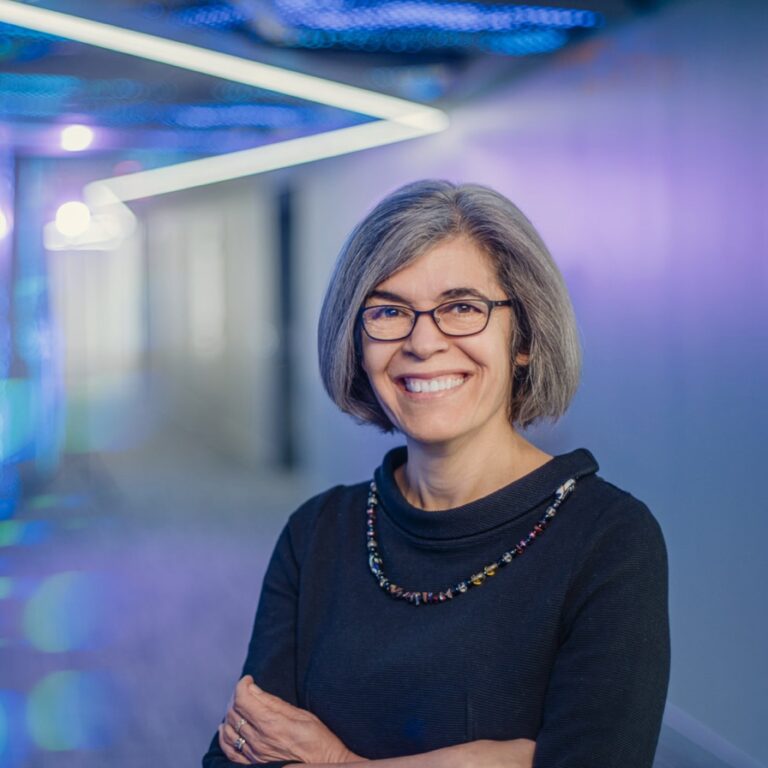
Kia Nobre
Prof. Kia Nobre is a cognitive neuroscientist at Yale University, where she leads the Center for Neurocognition and Behavior at the Wu Tsai Institute.
She obtained her PhD at Yale with Greg McCarthy and completed postdoctoral research at Harvard Medical School with Marsel Mesulam. Before joining Yale (2023), Kia spent many (~30) years at the University of Oxford (1994-2023), latterly as Chair of Translational Cognitive Neuroscience and director of the Oxford Centre for Human Brain Activity. Kia’s research and scientific leadership have been recognized by memberships to international learned societies (Academia Europaea, British Academy, National Academy of Sciences, American Academy of Arts & Sciences) and various prestigious prizes, including the Broadbent Prize from the European Society for Cognitive Psychology (2019), C.L. de Carvalho-Heineken Award for Cognitive Science (2022), and the Fred Kavli Distinguished Career Contributions Award from the Cognitive Neuroscience Society (2024). Her mentoring abilities and dedication have also been recognized by a Lifetime Mentor Award (2022) from the Association for Psychological Science (APS).
Her current research aims at understanding how the brain dynamically and proactively prioritizes and selects information from the sensory stream and from memories at various time scales to form psychological experience and guide behavior.
Focusing attention on sensory x memory contents to guide behavior
The ability to anticipate, select, prioritize, and prepare the relevant contents is fundamental to flexible, proactive, and adaptive cognition. Traditionally, these attention functions have been investigated in relation to extracting relevant contents from the incoming sensory stream. Much more recently, the ability to focus attention on contents of internal, memory representations was recognized and garnered experimental interest. Research on “internal attention” reveals fascinating ways in which neural systems and mechanisms differ from those in “external attention”. We are now ready for the next steps. During natural behavior in extended and dynamic contexts, the focus of attention shifts seamlessly between sensory and memory contents. In my talk, I will highlight some unique properties of internal attention and share our early attempts to understand how attention brokers between external and internal contents to ground adaptive cognition.